Some links on this page are affiliate links. If you buy through them we may earn a commission at no extra cost to you. How we make money.
Our top pick is the GoCat Da Bird Feather Wand, because it mimics a flying bird and gets you playing with your cat. It suits most healthy indoor cats, and the other picks cover puzzle feeding, solo play and laser sessions.
Key takeaways
- A feather wand like Da Bird is the best starting point for most indoor cats, since it combines realistic prey motion with bonding time.
- Mix toy types: wands for active play, puzzle feeders for mental effort, and electronic or track toys for solo moments.
- Use lasers sparingly and carefully, never at the eyes, and always end with a treat or physical toy so the hunt feels complete.
- Store string and wand toys after play, and treat swallowed string as an emergency that needs a vet immediately.
- Rotate toys, keep sessions short and regular, and watch body language so play stays fun rather than frustrating.
Indoor cats have safety, but they often lack the chase, stalk and pounce routine their bodies and brains are built for. Interactive toys fill that gap. Bored cats may overgroom, scratch furniture, yowl at night, or gain weight, and a few focused play sessions a day can help with all of those.
We chose these products through research rather than hands-on testing. We looked at well-established brands, how closely each toy copies prey movement, how easy it is to use, whether it suits solo or shared play, and how well it fits different ages and energy levels. We also favored toys with simple designs and clear safety considerations.
Below you will find six picks across wands, puzzle feeders, a laser, and electronic toys. Then we cover how to choose, how to use lasers cautiously, the mistakes owners often make, and tips for getting more out of every play session.
Our top picks at a glance
| # | Product | Why we like it | |
|---|---|---|---|
| 1 | Go Cat Da Bird Feather Teaser Wand Best Overall | Da Bird is a long-time favorite among cat owners because its feather attachment spins and flutters through the air in a way that looks a lot like a bird in flight. | View |
| 2 | Cat Dancer Original Interactive Cat Toy Best Budget | The Cat Dancer is a very simple toy: a length of springy wire with small rolled cardboard pieces on the end. | View |
| 3 | Catit Senses 2.0 Food Maze Best Puzzle Feeder | The Food Maze is a circular, track-style feeder that you fill with dry kibble or treats. | View |
| 4 | PetSafe Bolt Interactive Laser Cat Toy Best Laser Option (Use with Caution) | The PetSafe Bolt is an automatic laser toy that moves a red dot in random patterns, so cats get exercise even when you are busy. | View |
| 5 | SmartyKat Hot Pursuit Electronic Concealed Motion Cat Toy Best Electronic Toy for Solo Play | Hot Pursuit hides a moving lure under a fabric cover, so your cat sees and hears something scurrying beneath the surface. | View |
| 6 | Petstages Tower of Tracks Cat Toy Best for Kittens | Tower of Tracks has stacked circular tracks with colorful balls that cats can bat and chase. | View |
Product reviews
Go Cat Da Bird Feather Teaser Wand
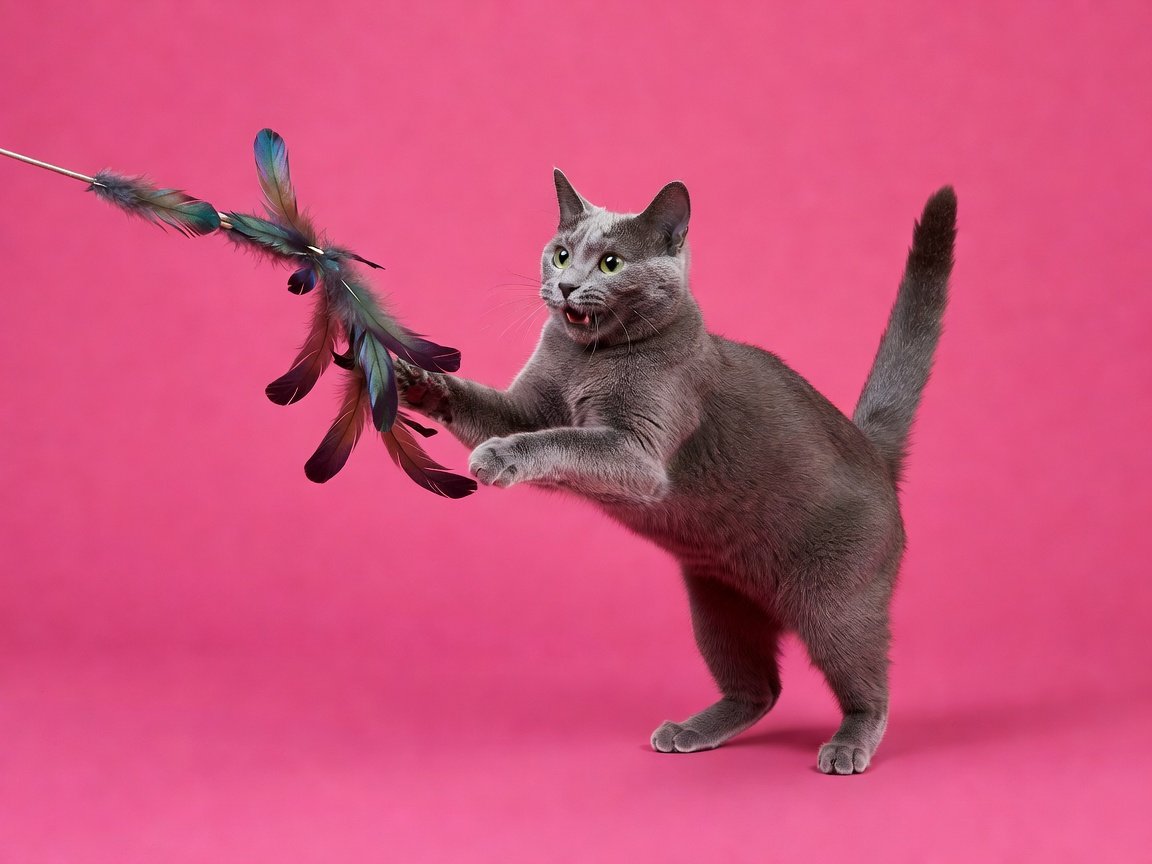
Best OverallDa Bird is a long-time favorite among cat owners because its feather attachment spins and flutters through the air in a way that looks a lot like a bird in flight. The wand lets you control speed and direction, so you can make the lure swoop, dart and hide behind furniture. It is a human-powered toy, which makes it ideal for building a bond and for the full stalk, chase and catch routine. Replacement feather attachments are sold separately.
PROS
- Realistic flying-prey motion that appeals to many cats
- Gets you involved, which strengthens the bond
- Replacement attachments are available
CONS
- Needs your time and attention, so it is not for solo play
- Feathers wear out with enthusiastic play and must be stored safely
Cat Dancer Original Interactive Cat Toy
Best BudgetThe Cat Dancer is a very simple toy: a length of springy wire with small rolled cardboard pieces on the end. Its design is a classic, and many cats go wild for the erratic, insect-like bounce it creates with the slightest flick of your wrist. It is lightweight, easy to store, and has no feathers, strings or moving parts to fail. It works especially well for cats that like to chase small, skittering prey, and it is an easy way to start interactive play.
PROS
- Very simple, with no strings or electronics
- Small insect-like motion appeals to many cats
- Compact and easy to put away
CONS
- The cardboard pieces wear out and may need replacing
- Very strong chewers can damage it quickly
Catit Senses 2.0 Food Maze
Best Puzzle FeederThe Food Maze is a circular, track-style feeder that you fill with dry kibble or treats. Your cat has to hook the food with a paw and fish it out through the maze, which slows down fast eaters and gives bored cats a job to do. It is a good way to turn part of a meal into mental and physical activity. Start with an easy setup, then make it harder as your cat learns how it works.
PROS
- Encourages slower eating and natural foraging
- Works for solo enrichment while you are busy
- Easy to adjust the difficulty by changing the food amount
CONS
- Some cats lose interest if the food is not enticing enough
- Needs regular cleaning to keep it hygienic
PetSafe Bolt Interactive Laser Cat Toy
Best Laser Option (Use with Caution)The PetSafe Bolt is an automatic laser toy that moves a red dot in random patterns, so cats get exercise even when you are busy. It is best used in short, supervised sessions rather than as a babysitter. Lasers never let a cat catch anything, so finish each round by tossing a treat or a soft toy to give the hunt a satisfying end. Check the product listing for details on power source and run settings.
PROS
- Automatic movement gives hands-free exercise
- Good for cats that love chasing light
- Useful for short, supervised sessions
CONS
- No physical catch, which can frustrate some cats
- Must never be pointed at eyes, and should not be left running unsupervised
SmartyKat Hot Pursuit Electronic Concealed Motion Cat Toy
Best Electronic Toy for Solo PlayHot Pursuit hides a moving lure under a fabric cover, so your cat sees and hears something scurrying beneath the surface. That taps into the instinct to pounce on prey that is half hidden. It is a handy choice for solo play when you are working or out for a short time, and it lets cats actually touch and grab the moving target. Check the listing for battery needs and the available replacement parts.
PROS
- Hidden-prey movement can keep curious cats busy
- Cats can actually touch and catch the target
- Good for solo play between interactive sessions
CONS
- Some cats lose interest once the novelty fades
- Battery-powered, so it needs occasional upkeep
Petstages Tower of Tracks Cat Toy
Best for KittensTower of Tracks has stacked circular tracks with colorful balls that cats can bat and chase. The balls stay inside the toy, so there is nothing to lose under the sofa, and the design is easy for young cats to understand. It supports solo play and hand-eye coordination, which makes it a good fit for kittens and playful adults. Because it is not a replacement for human play, it works best alongside wand sessions.
PROS
- Simple, intuitive design that suits kittens
- Balls stay contained inside the tracks
- Good for short solo play sessions
CONS
- Confident adult cats may get bored with it faster
- Less engaging than live prey movement from a wand
How to Choose the Best Interactive Cat Toys for Your Cat
Start with your cat's play style. Cats are predators, and the best toys copy the stages of the hunt: stalk, chase, pounce, catch. Watch what your cat does naturally. Does she leap at birds through the window, or crouch over small moving things on the floor? That tells you whether a flying feather lure or a skittering ground toy is the better match.
Match the toy type to the job
- Wand toys are human-powered and best for bonding and high-energy play. They give you full control over speed and movement.
- Puzzle feeders add mental effort and slow down fast eaters. They are especially useful for cats who inhale their meals.
- Electronic toys offer movement when you are busy. They are good extras, not replacements for your own time.
- Track and ball toys suit kittens and cats who enjoy batting things on their own.
- Lasers can burn off energy, but they need careful use (more on that below).
Consider age, health and home
Kittens need small, lightweight toys they can control. Seniors or cats with stiff joints often prefer slower, lower-to-the-ground movement. Overweight cats may need gentle sessions that build up gradually. In multi-cat homes, make sure each cat has enough space and toys so nobody gets cornered or shut out.
Check safety and durability
Look for toys with no loose small parts that could be chewed off and swallowed. Strings, ribbons and elastic are the biggest concern, because swallowed string can cause a serious blockage. Choose products with replaceable parts, and inspect them regularly for fraying. Wands and anything with string should always be put away after play, not left lying around.
Finally, be realistic about your routine. A toy you will actually use daily beats an impressive gadget that sits in a drawer.
Using Laser Pointers Safely (and Knowing Their Limits)
Lasers are popular because cats chase the dot with such enthusiasm. But they come with a real drawback: your cat can never catch it. For a predator, a hunt that never ends in a capture can be frustrating, and some cats become fixated on lights and reflections afterward. If your cat seems anxious, obsessive or restless after laser play, it is worth switching to other toys.
Safer laser habits
- Never aim at eyes. Keep the beam low and on the floor or walls, and be careful of reflective surfaces.
- Keep sessions short. A few minutes is enough, and you should stop if your cat looks overstimulated.
- Give the hunt an ending. Finish by landing the dot on a treat, a puzzle feeder or a soft toy so your cat gets to "catch" something.
- Supervise. Do not leave automatic lasers running while you are out of the house. Cats can get overexcited, run into things or become frustrated.
- Use it as a supplement. Make wands and physical toys your main play, and treat the laser as an occasional extra.
Who should skip lasers
Some cats do better without them entirely. If your cat already shows compulsive behaviors, such as staring at lights, chasing shadows or becoming agitated when play ends, talk to your veterinarian or a qualified behavior professional. Anxious or easily frustrated cats often prefer toys they can touch and bite.
The PetSafe Bolt in our list is an example of an automatic option, but the same rules apply to any laser. Think of it as a short warm-up, not the whole workout. Pair it with a real toy and a reward every time, and most cats will get the benefits with fewer downsides.
Common Mistakes with Interactive Cat Toys
Even the best toy fails if it is used in the wrong way. These are the problems we see most often.
Leaving string toys out
Wands, ribbons and anything with cord should be stored after play. Cats can chew and swallow string, and this is a genuine emergency risk. If you ever see string hanging from your cat's mouth or rear, do not pull it. Call a veterinarian immediately, along with signs such as repeated vomiting, loss of appetite, lethargy or abdominal pain.
Moving the toy toward the cat
Prey runs away. Wiggling a toy in your cat's face is more likely to put her off than excite her. Move the lure away from her, across the floor or in an arc, and let it hide behind objects. Pause so she can stalk it.
Never letting your cat win
A cat who never catches anything gets frustrated and often gives up. Let her pounce and hold the toy regularly. Ending with a catch and a snack keeps play satisfying.
Using the same toy every day
Cats get bored of predictable toys. Rotate a small collection every few days, and only bring each toy out for play sessions. This keeps them novel.
Choosing puzzles that are too hard
If a puzzle feeder is too difficult at first, your cat may just walk away. Start with easy setups and plenty of food accessible, then raise the challenge gradually.
Ignoring body language
Tail lashing, flattened ears, skin rippling along the back and hard biting can mean overstimulation. Slow the toy down and end the game calmly. Also, a sudden drop in play interest can sometimes signal pain or illness, so mention it to your vet if it lasts.
Tips for Getting the Most from Play Time
Consistency matters more than any single gadget. A simple routine can turn ordinary toys into a powerful enrichment plan.
Follow the hunt, catch, eat pattern
Many behavior experts recommend mimicking the natural predatory sequence. Start with a wand to get your cat stalking and chasing, let her catch the toy several times, then offer a meal or a treat. Playing before mealtime works well, and a puzzle feeder can serve as the "eat" step.
Aim for short, regular sessions
Two or more sessions of around 10 to 15 minutes a day suit many adult cats, though individual needs vary. Kittens usually want shorter, more frequent bursts. Seniors may prefer gentler play with more rest.
Keep toys fresh
Keep a small rotation of toys and store the rest out of sight. Hide a toy under a blanket, behind a box or on a cat tree to add variety. Cardboard boxes and paper bags (with handles removed) cost almost nothing and add extra novelty.
Use height and space
Cats like to climb, so move a wand up a cat tree or along a shelf. Make sure the floor is not slippery, because cats need traction when they sprint and leap.
Support multi-cat homes
Play with each cat separately if one is shy or one hogs the toy. Provide several toys at once to reduce competition.
Watch your cat's weight and health
Play helps with activity, but food portions still matter. If you use a puzzle feeder, count its contents toward the daily total. If your cat plays much less than usual, breathes heavily after minimal play or seems stiff or uncomfortable, a veterinarian visit is a good next step.
Frequently asked questions
What are the best interactive cat toys for indoor cats?
A feather or flutter wand is the best all-round choice because it copies prey movement and lets you play together. Add a puzzle feeder for mental effort and an electronic or track toy for solo play. Mixing types usually works better than relying on one.
Are laser pointers bad for cats?
Not automatically, but they have drawbacks. Cats cannot catch the dot, which can cause frustration or fixation in some. Never aim it at the eyes, keep sessions short, and finish with a treat or physical toy. If your cat becomes obsessive, stop using it.
How often should I play with my cat?
Many adult cats do well with at least two sessions of roughly 10 to 15 minutes daily. Kittens often need shorter, more frequent bursts, and seniors may prefer gentler play. Adjust to your cat's energy, age and health, and ask your vet if you are unsure.
Can electronic toys replace playing with my cat?
No. Electronic toys are useful for solo moments, but they usually lack the variety and responsiveness of a person moving a wand. Think of them as a supplement. Your attention, plus the chance to catch and bite a toy, is hard to replace.
Is it safe to leave wand toys out?
No. Wands and string toys should be put away after each session. Cats can chew and swallow cord, feathers or elastic, which can cause a dangerous blockage. If you suspect your cat swallowed string, do not pull it and contact a veterinarian right away.