Some links on this page are affiliate links. If you buy through them we may earn a commission at no extra cost to you. How we make money.
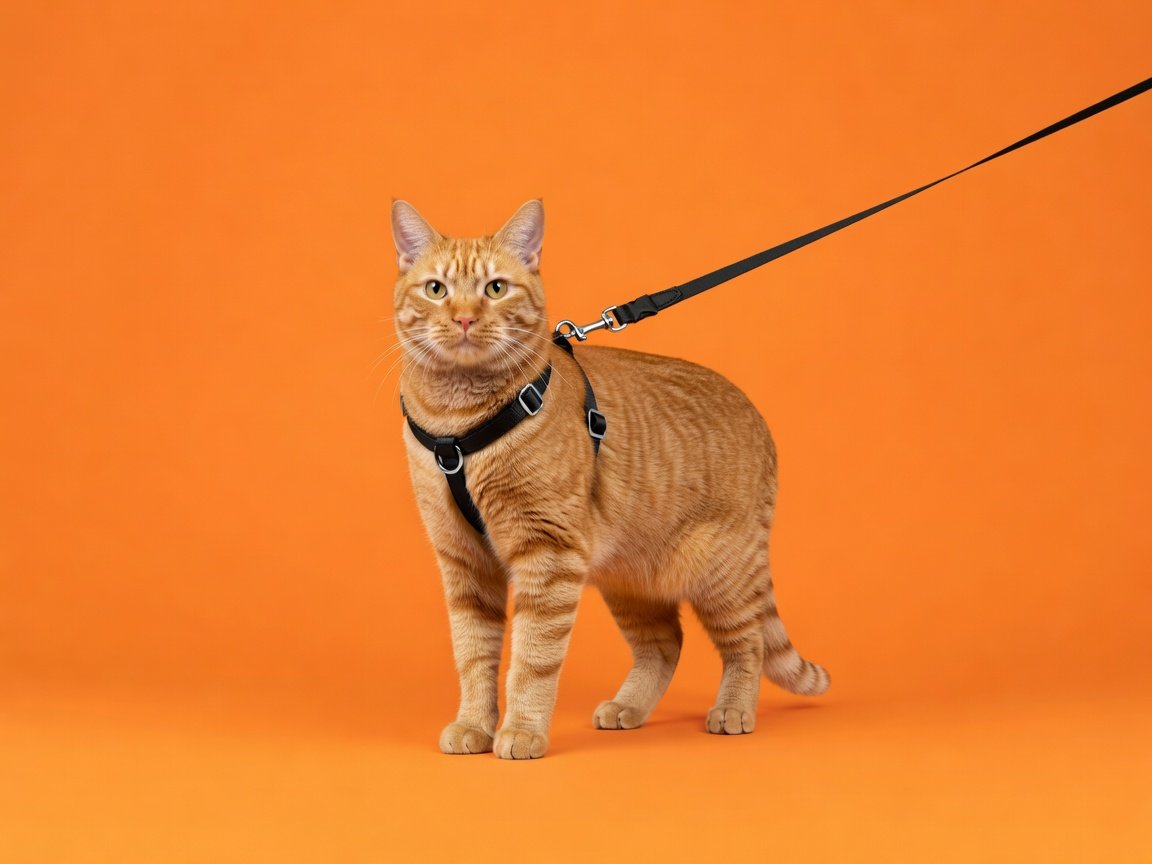
The Rabbitgoo Cat Harness and Leash Set is our top pick for most owners because it is a widely available vest style with adjustable straps and several sizes. If your cat wriggles out of everything, look at a snugly fitted vest. If your cat tolerates gear well, a simple H-style like the PetSafe Come With Me Kitty is quick to put on.
Key takeaways
- Vest-style harnesses are usually the most secure for escape artists, while H-style harnesses suit calm cats and are quicker to put on.
- Measure neck and chest with a soft tape, follow each brand's size chart, and aim for a snug fit with about two fingers of room.
- Train in small steps indoors first, using treats, and go back a step whenever your cat shows stress.
- No harness is truly escape-proof, so use a fixed lightweight leash, choose quiet places, and never leave a tethered cat alone.
- Talk with your veterinarian about vaccinations, parasite prevention and microchipping before regular outdoor time.
A good harness is the difference between a relaxed backyard stroll and a cat that slips free and bolts under a porch. Collars and leashes alone are not safe for cats, because pulling on the neck can injure the throat, and a cat's flexible shoulders let it back out of a loose collar in seconds. A properly fitted harness spreads pressure across the chest and body instead.
This guide is research-based. We have not run hands-on tests. We compared well-known harnesses on the criteria that matter most for escape resistance and comfort: design type (vest versus H-style), number of adjustment points, secure closures, breathable materials, size range, and the reputation of the brand. We also considered how easy each one is to put on a nervous cat.
No harness is truly escape-proof. Treat every pick as escape-resistant, check the fit every time, and never leave a tethered cat unattended.
Our top picks at a glance
| # | Product | Why we like it | |
|---|---|---|---|
| 1 | Rabbitgoo Cat Harness and Leash Set Best Overall | Rabbitgoo makes one of the most commonly recommended vest-style cat harnesses, and it comes with a matching leash. | View |
| 2 | Kitty Holster Cat Harness Best for Secure Fit | Kitty Holster is a cat-specific brand known for a soft, vest-like harness designed around feline anatomy rather than adapted from a small dog design. | View |
| 3 | PetSafe Come With Me Kitty Harness and Bungee Leash Best for Easy On and Off | The PetSafe Come With Me Kitty set is a familiar, mainstream option that combines a harness with a bungee-style leash that absorbs some of the sudden tugs. | View |
| 4 | Voyager Step-In Air Harness Best Lightweight Option | The Voyager Step-In Air is a mesh, step-in style harness sold for small dogs and cats. | View |
| 5 | Catit Nylon Adjustable Cat Harness with Leash Best Simple Starter | Catit is a respected cat-focused brand, and this nylon harness with a leash is a straightforward option for owners who want a basic, adjustable setup. | View |
Product reviews
Rabbitgoo Cat Harness and Leash Set
Best OverallRabbitgoo makes one of the most commonly recommended vest-style cat harnesses, and it comes with a matching leash. The vest design covers more of the torso than thin straps, which many owners find harder for a cat to back out of. It has adjustable straps and is sold in multiple sizes, so you can match it to your cat's chest and neck measurements. Always check the brand's current size chart, since sizing runs differently between brands, and confirm the fit before every outing.
PROS
- Vest design that spreads pressure across the chest
- Leash included in the set
- Multiple sizes and adjustable straps
- Widely available with lots of owner feedback to read
CONS
- Fabric vest can feel warm on hot days
- Some cats need a slow introduction to the vest feel
- Sizing must be checked carefully against the chart
Kitty Holster Cat Harness
Best for Secure FitKitty Holster is a cat-specific brand known for a soft, vest-like harness designed around feline anatomy rather than adapted from a small dog design. It is often chosen by owners of cats who are good at slipping out of simpler harnesses. Check the brand's measuring guide before ordering, because a snug fit is what makes this style work. It suits cats who tolerate being handled and are patient with a bit more fiddling during the first few fittings.
PROS
- Designed specifically for cats
- Vest style gives more coverage than basic straps
- Well suited to Houdini-type cats when properly fitted
CONS
- Can take longer to put on than a simple strap harness
- Needs careful measuring to get the fit right
- May be less convenient for very squirmy cats at first
PetSafe Come With Me Kitty Harness and Bungee Leash
Best for Easy On and OffThe PetSafe Come With Me Kitty set is a familiar, mainstream option that combines a harness with a bungee-style leash that absorbs some of the sudden tugs. It is a good fit for owners who want something simple and quick to fasten, especially for calm cats that already accept being touched around the chest. Because it is less enclosed than a full vest, fit matters even more, so adjust it until it is snug and check it often during walks.
PROS
- From a large, well-known pet brand
- Bungee leash softens sudden pulls
- Relatively quick to put on
- Several sizes to choose from
CONS
- Less coverage than a full vest, so a cat can escape if it is loose
- Not the best choice for known escape artists
- Bungee leash may feel stretchy to owners who want tight control
Voyager Step-In Air Harness
Best Lightweight OptionThe Voyager Step-In Air is a mesh, step-in style harness sold for small dogs and cats. The lightweight, breathable material makes it a reasonable pick for warm climates and for cats that dislike heavy fabric. Your cat steps into the openings and you fasten it at the back, which avoids pulling anything over the head. It is best for relaxed cats. Check that the sizing suits your cat's chest measurement, and note it is not specifically cat-engineered.
PROS
- Breathable mesh material
- Step-in design avoids going over the head
- Easy to wash and dry
- Variety of colors and sizes
CONS
- Not designed only for cats
- Mesh can be less durable under heavy chewing or scratching
- May be easier to wriggle out of if not adjusted snugly
Catit Nylon Adjustable Cat Harness with Leash
Best Simple StarterCatit is a respected cat-focused brand, and this nylon harness with a leash is a straightforward option for owners who want a basic, adjustable setup. It works well as a starter harness for training indoors, where you can let your cat get used to the feel before heading outside. Adjustable nylon straps allow you to fine-tune the fit. As with any simple harness, you will need to check that it is tight enough to prevent backing out.
PROS
- Cat-focused brand
- Adjustable nylon straps
- Leash included for convenience
- Good for indoor practice sessions
CONS
- Simpler designs are easier for escape artists to slip out of
- Needs precise adjustment to stay secure
- Fewer features than vest-style harnesses
How to choose the best cat harness
Start with the design, because that decides how hard it is for your cat to back out of it.
Vest style
A vest harness wraps around more of the torso, usually with a fabric panel across the chest and back. Because there is more material and typically more points of contact, many owners find it harder for a cat to wriggle free. It also spreads pressure more broadly. The trade-off is that it can feel warmer and more restrictive, and some cats dislike the feeling of full coverage.
H-style
An H-style harness is made of straps that form the shape of an H when laid flat. One loop goes around the neck and another around the ribcage, joined by a strap along the back. It is lightweight and fast to put on, which suits calm cats. The downside is that it relies entirely on a snug fit. Loose straps give a flexible cat room to twist out.
Features worth looking for
- Multiple adjustment points: Neck and chest should both adjust, ideally on each side.
- Secure closures: Look for sturdy buckles or clips that a cat cannot paw open.
- Breathable, soft fabric: Mesh or padded materials reduce chafing, especially under the front legs.
- A D-ring on the back: The leash should attach between the shoulder blades, not at the neck.
- Reflective trim: Helpful at dusk, although walks are safest in daylight.
Which style should you pick?
For a first harness or a cat who has already escaped something, a well-fitted vest is usually the more cautious choice. For a laid-back cat or one you only take on short supervised trips, an H-style can be perfectly fine. Whatever you choose, plan to walk in a quiet, enclosed or low-risk area first, and keep your cat's ID tags and microchip details current in case of an accident.
How to size and fit a harness correctly
Fit is the single biggest factor in whether a harness works. A great design in the wrong size is not safe.
What to measure
Use a soft tape measure while your cat is standing relaxed. Most brands ask for two measurements:
- Neck circumference: Measure around the base of the neck, where a harness would sit, not the loose skin higher up.
- Chest circumference: Measure around the widest part of the ribcage, just behind the front legs.
Some brands also ask for back length. If your cat is between sizes, check the manufacturer's guidance, since sizes differ from brand to brand. Do not assume a medium in one brand matches a medium in another.
The two-finger check
Once the harness is on, you should be able to slide about two fingers under any strap, but not much more. If you can fit three fingers, it is likely too loose. If you cannot fit two, it is too tight and may restrict breathing or movement.
Test the fit before going out
- Let your cat walk around indoors for a few minutes and watch for stiff movements, freezing, or dragging.
- Gently pull on the harness from the back ring to see whether the straps slide over the head or shoulders.
- Check under the front legs for rubbing or bunching.
- Look at the neck strap, which is the most common point of escape.
Plan for growth and coat changes
Kittens grow quickly, so a harness that fits today may be loose in a few weeks. Cats with long or fluffy coats can feel bulkier than they are, so measure the body, not the fur. Recheck the fit often, especially after your cat gains or loses weight, and replace any harness whose straps are frayed or whose buckles are stiff or cracked.
Common harness mistakes that lead to escapes
Most harness escapes come from a handful of predictable errors. Fixing them is usually easier than buying a new harness.
Fitting it too loosely
Owners often leave a harness loose because they worry about discomfort. A loose harness gives your cat room to back out, and cats are remarkably good at it. Snug, with room for two fingers, is the goal.
Skipping the training stage
Putting a harness on and heading straight outdoors is the fastest route to panic. A frightened cat will thrash, flatten and pull backwards, which tests even the best gear. Practice indoors first.
Using a collar or retractable leash
Collars can slip off or injure the neck under tension. Retractable leashes allow sudden lunges and make it hard to react quickly. A fixed-length lightweight leash gives you more control.
Walking in unsafe places
Busy streets, off-leash dogs, loud construction and open water all increase risk. Choose a quiet yard, a fenced area or a calm park, and keep sessions short.
Letting the cat lead
Cats are not dogs. Many prefer to explore at their own pace, sniffing and sitting. Following your cat, rather than trying to steer it on a route, keeps the experience calmer and reduces pulling.
Forgetting basic health protection
Before outdoor time, talk with your veterinarian about vaccinations, parasite prevention such as flea and tick control, and microchipping. These are not harness issues, but they matter once your cat is exposed to the outdoors.
Leaving the harness on unattended
Never leave a harness on a cat that is not supervised. Straps can catch on furniture or get chewed, and a cat tethered to anything while alone can be seriously hurt. If your cat appears to be choking, cannot breathe or is trapped, remove the harness immediately and seek urgent veterinary care.
How to train your cat to wear a harness
Most cats can learn to accept a harness, but the pace should be set by your cat. Expect this to take days or weeks, not minutes.
Step 1: Introduce the harness as a neutral object
Leave it near your cat's bed or feeding area. Let your cat sniff it. Pair it with treats or praise so it becomes associated with good things.
Step 2: Touch and drape
Once your cat is relaxed, gently place the harness on its back without fastening it, then reward and remove it. Repeat over several sessions.
Step 3: Fasten briefly
Clip the harness on for a few seconds, offer a treat or a play session, and take it off before your cat gets upset. Slowly extend the time to a few minutes.
Step 4: Wear it during normal activities
Let your cat wear it during meals, play and cuddles. Watch for signs of stress such as freezing, flattened ears, hiding or constant scratching at it. If you see these, go back a step.
Step 5: Add the leash indoors
Attach a lightweight leash and let your cat drag it around while supervised. Then pick up the end and walk behind your cat without pulling.
Step 6: Go outside gradually
Begin in a quiet, safe, enclosed spot. Carry your cat out if needed, put it down, and let it explore. Keep the first outings short and end on a good note.
Helpful habits
- Use high-value treats your cat only gets during training.
- Choose a calm time of day, not just before meals or during heavy activity.
- Avoid forcing, scolding or dragging.
- Check the fit each time.
If your cat remains very distressed despite patient training, it may simply not be a harness cat. That is fine. Safe outdoor alternatives like a secure catio or window perch may suit better. Your veterinarian or a qualified behaviorist can help with a fearful or anxious cat.
Frequently asked questions
Are cat harnesses really escape-proof?
No harness is guaranteed escape-proof. Some designs, especially snug vests, are harder to back out of, but fit and training matter most. Check the fit every time, use a lightweight fixed leash, and stay close. Never leave a tethered cat unattended.
Is a vest or H-style harness better for cats?
A vest covers more of the body and is often more secure for escape artists or nervous cats. An H-style is lightweight and quick to put on, so it suits calm cats. Either style only works if it is snug, with about two fingers of room under the straps.
Can kittens wear harnesses?
Yes, many kittens can be introduced to a harness in short, supervised indoor sessions. They grow fast, so check fit often and choose adjustable sizes. Ask your veterinarian when it is safe for outdoor trips, because vaccinations and parasite protection should be in place first.
How long does it take to train a cat to wear a harness?
It varies. Some cats accept a harness within a few days, while others need several weeks of gradual steps. Go at your cat's pace, use treats, and move back a step if you see stress. Rushing usually backfires and can create lasting dislike.
Should my cat wear a collar and a harness together?
Many owners use both, with ID tags on a breakaway collar and the harness for walking. Never attach a leash to the collar. The leash clips to the harness only. Check that neither one is so tight that they rub, and remove the harness when not supervised.