Some links on this page are affiliate links. If you buy through them we may earn a commission at no extra cost to you. How we make money.
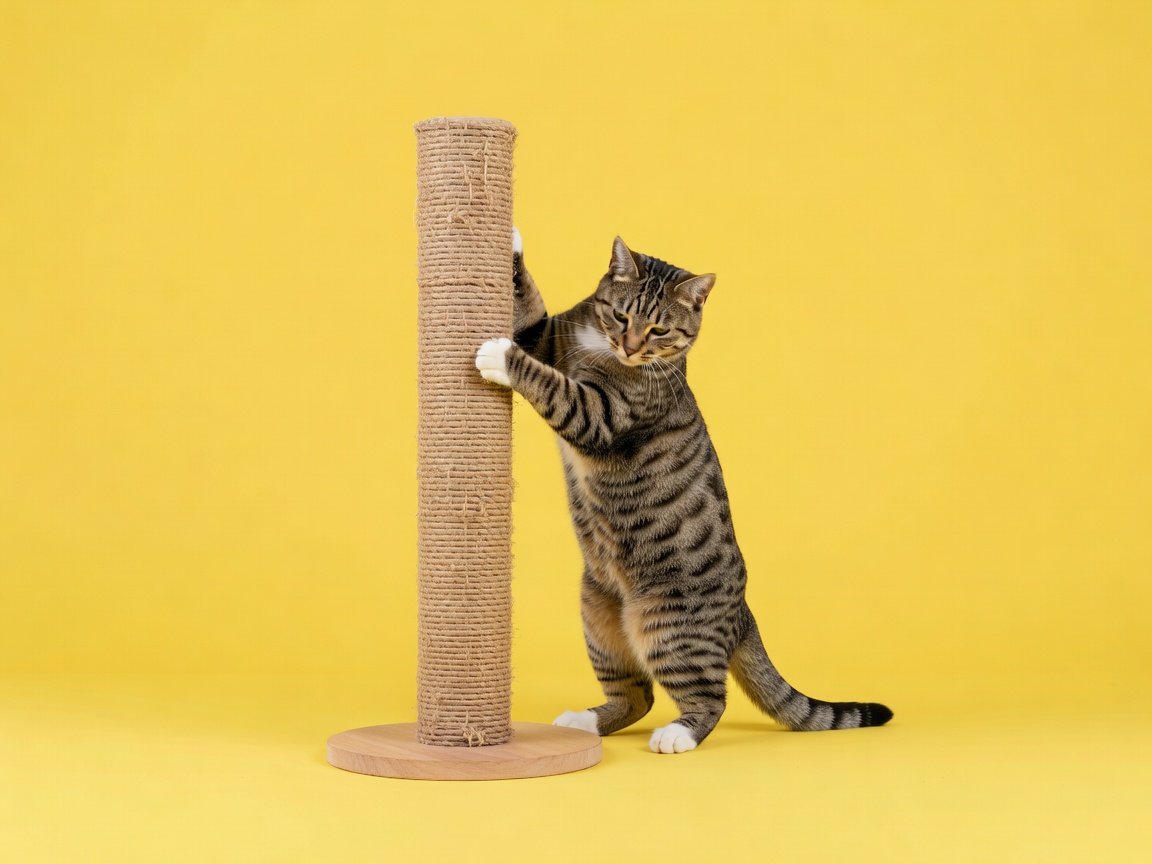
The SmartCat Ultimate Scratching Post is our top pick for most homes because it is tall, sturdy and covered in sisal, which suits cats that like a full vertical stretch. If your cat prefers horizontal scratching or you want a budget option, a cardboard lounge scratcher is a good second choice.
Key takeaways
- Choose a post that matches how your cat scratches: vertical, horizontal or angled.
- Stability and height matter most. A wobbly or short post is likely to be ignored.
- Sisal is durable for vertical posts, while cardboard is cheap and popular with floor scratchers.
- Place scratchers where your cat already scratches, near sleeping spots and in social areas.
- Use rewards, not punishment, and never rely on declawing to solve scratching.
- Offer several scratchers and swap styles if one is being ignored.
Scratching is not bad behavior. It is how cats stretch, shed worn claw sheaths, mark territory with scent glands in their paws, and burn off energy. If you do not give them a better option, your sofa becomes the scratching post.
That is why the right post matters more than the number of posts. A wobbly or short one gets ignored, and a cat that ignores it keeps shredding your furniture.
We built this guide through research rather than hands-on testing. We looked at the criteria that feline behavior experts commonly highlight: height, stability, scratching material, and whether the design suits vertical or horizontal scratchers. We also considered how well-known each product is and how widely owners discuss it. Below you will find five real products, followed by a buying guide, common mistakes, placement tips and answers to frequent questions.
Our top picks at a glance
| # | Product | Why we like it | |
|---|---|---|---|
| 1 | SmartCat Ultimate Scratching Post Best Overall | A tall, sisal-covered post that is popular with owners of larger or very energetic cats. | View |
| 2 | PetFusion Ultimate Cat Scratcher Lounge Best Cardboard Scratcher | A reversible cardboard lounge that doubles as a place to nap, which appeals to cats that scratch on the floor or rugs. | View |
| 3 | Yaheetech Multi-Level Cat Tree Best Cat Tree | Yaheetech makes a range of multi-level cat trees that combine sisal-wrapped posts with perches, condos and platforms. | View |
| 4 | SmartCat Bootsie's Combination Scratcher Best for Small Spaces | A compact scratcher from SmartCat that combines more than one scratching surface in a low-profile format. | View |
| 5 | SmartCat Pioneer Pet Ultimate Scratching Post Replacement Alternative: Cat Scratching Post Sisal Rope Best Budget Refresh | If your cat already likes a post but the sisal is shredded, replacing or re-wrapping it is often cheaper than starting over. | View |
Product reviews
SmartCat Ultimate Scratching Post
Best OverallA tall, sisal-covered post that is popular with owners of larger or very energetic cats. Its main appeal is that it is tall enough for a full-body stretch and built to resist wobbling, which is the top reason cats reject posts. Sisal gives claws something satisfying to grip and pull against. It is a straightforward design with no frills, which makes it easy to place near a sofa or sleeping spot. Check the current listing for exact dimensions before buying.
PROS
- Tall enough for a full vertical stretch
- Sisal surface suits most scratching styles
- Stable design that works for bigger cats
- Simple look that fits most rooms
CONS
- Takes up floor space
- Only suits cats that scratch vertically
- Sisal will eventually fray and need replacing
PetFusion Ultimate Cat Scratcher Lounge
Best Cardboard ScratcherA reversible cardboard lounge that doubles as a place to nap, which appeals to cats that scratch on the floor or rugs. Cardboard is inexpensive to replace and many cats take to it quickly because it shreds easily. The angled shape encourages a stretch while scratching, and the lounge form gives your cat a reason to hang around it. Expect some cardboard debris, and plan to replace the insert as it wears down.
PROS
- Good for horizontal and angled scratchers
- Reversible, so you get extra life from one insert
- Doubles as a lounge spot
- Lightweight and easy to move
CONS
- Creates cardboard mess
- Not as durable as sisal
- Less useful for cats wanting a tall vertical stretch
Yaheetech Multi-Level Cat Tree
Best Cat TreeYaheetech makes a range of multi-level cat trees that combine sisal-wrapped posts with perches, condos and platforms. This kind of tree suits households that want scratching, climbing and resting in one piece of furniture, especially with more than one cat. Since models vary, compare the current listings for height, weight limits and base stability. A heavy base matters because a tree that tips or sways will often be avoided by cats.
PROS
- Scratching, climbing and napping in one place
- Works well in multi-cat homes
- Vertical space helps shy cats feel secure
- Many size options to choose from
CONS
- Needs assembly and floor space
- Quality and stability vary by model
- Perches and carpet can collect hair and dust
SmartCat Bootsie's Combination Scratcher
Best for Small SpacesA compact scratcher from SmartCat that combines more than one scratching surface in a low-profile format. This kind of design suits apartments, kittens and cats that like variety. It tucks beside furniture without dominating a room, and the mix of textures helps you learn what your cat prefers. It is not a replacement for a tall post if your cat loves a full stretch. Check the current listing for materials and size.
PROS
- Compact and easy to place
- Offers more than one texture
- Good starter for kittens and small cats
- Affordable compared with full trees
CONS
- Too small for large cats to stretch fully
- May not satisfy dedicated vertical scratchers
- Surface will need replacing over time
SmartCat Pioneer Pet Ultimate Scratching Post Replacement Alternative: Cat Scratching Post Sisal Rope
Best Budget RefreshIf your cat already likes a post but the sisal is shredded, replacing or re-wrapping it is often cheaper than starting over. Sisal rope made for cat posts lets you refresh a stable post with a new surface. This suits handy owners and cats attached to a familiar spot. It is not a standalone scratcher, so you need a sturdy post to wrap. Check the listing to confirm rope thickness and length.
PROS
- Extends the life of a post your cat already likes
- Low cost compared with replacing furniture
- Lets you keep the post in a favorite spot
CONS
- Requires some DIY effort
- Needs a solid post to wrap
- Not a ready-to-use scratcher
How to choose the best cat scratching post
Start by watching how your cat scratches. Some cats stretch up a vertical surface, some drag their claws across the floor, and some prefer angled surfaces. Buy for that style, not for how a post looks in a catalog.
Height and stability
A post should let your cat stretch fully. Many behaviorists suggest it be taller than your cat's full body length when stretched. If it wobbles when your cat pulls on it, the cat will often stop using it. A heavy, wide base matters more than decorative extras.
Material
- Sisal rope or fabric: Durable and satisfying to grip. Often the first choice for vertical posts.
- Cardboard: Cheap and popular with horizontal scratchers. It wears out faster and creates debris.
- Carpet: Common on cheaper posts, but it can teach cats that carpet is fine to scratch, which may lead to damaged rugs.
- Natural wood or bark: Appeals to some cats and mimics outdoor scratching.
Orientation
Vertical posts suit stretchers. Flat or angled scratchers suit cats that go for rugs and mats. Wall-mounted scratchers save floor space and can be positioned at any height, though you need to anchor them securely.
Size of your cat
Large breeds like Maine Coons need taller, heavier posts with sturdy bases. Kittens and small cats can start with something compact, but they grow fast, so plan to upgrade.
Number of cats
A multi-cat home benefits from several scratchers in different places. Scratching is partly about scent marking, and cats like to do it in shared areas rather than hidden corners.
Sisal, cardboard, trees and wall scratchers compared
Each type has strengths. The best choice often involves mixing two or three.
Sisal posts
Sisal is tough and gives claws a firm grip. It is the standard choice for vertical posts. The downside is that it can fray and eventually need replacing. Tightly wrapped sisal tends to hold up better than loosely wrapped versions.
Cardboard scratchers
Cardboard is inexpensive and many cats love shredding it. Flat and angled designs suit cats that scratch horizontally. The tradeoffs are mess and a shorter lifespan. Think of it as a consumable you replace regularly.
Cat trees
Trees combine scratching, climbing and sleeping. They suit multi-cat homes and cats that enjoy high perches. Look for a wide base, thick posts and solid construction. Quality varies a lot, so read the current listing for weight limits and stability notes.
Wall scratchers
Wall-mounted scratchers save floor space and let cats scratch at full stretch. They suit small apartments. You need to mount them securely into studs or with appropriate anchors, and check that the mounting suits your wall type and any rental rules.
Door hangers
Some scratchers hang over doors. They are cheap and compact but can swing, which some cats dislike. They work better as a supplement than as the only scratcher.
Which should you pick?
If you only buy one, choose a tall, stable sisal post for vertical scratchers or a cardboard lounge for floor scratchers. If your cat uses both, offer both. Variety lowers the odds that your sofa gets chosen.
Common mistakes that make cats ignore a scratching post
Most cats are happy to scratch an appropriate surface. When they do not, the cause is usually one of a few fixable mistakes.
Buying a post that is too short or wobbly
Cats want to stretch and pull. If the post tips, shifts or is too short, they will go back to the sofa. Test stability by pushing the post firmly before you put it down.
Hiding it in a quiet corner
Scratching is a social and scent-based behavior. A post in a spare room rarely gets used. Put it where your cat spends time.
Choosing the wrong material
If your cat shreds your rug, try a flat scratcher. If your cat scratches the side of the sofa, try a tall vertical post. Match the surface and direction to what they already prefer.
Using punishment
Shouting, spraying water or physically correcting your cat does not teach them where to scratch. It can make them anxious and avoid you. Redirect instead and reward them when they use the post.
Declawing as a fix
Declawing is not a behavior solution. It is a painful amputation of the end of each toe bone, and many veterinary organizations and countries oppose it. If scratching is a problem, talk to your veterinarian about alternatives such as regular nail trims and behavior support.
Replacing a post too soon
A shredded post is not necessarily a worn-out one. Cats often prefer a well-used scratcher because it smells like them and offers more to grip. Replace it only if it is unstable or falling apart.
Using only one scratcher
One post for a whole home rarely covers a cat's needs. Several scratchers placed around the house work better, especially for multi-cat households.
Placement and training tips that work
Where you put a post often matters as much as which post you buy.
Put it where the scratching already happens
If your cat scratches the end of the sofa, place the new post right next to it. Once the cat uses it consistently, you can slowly shift it to a spot you prefer, a little at a time.
Use key moments
Cats tend to stretch and scratch after waking up. Place a scratcher near their favorite sleeping spot. Entry points and doorways are also popular because they are good places for scent marking.
Make the post appealing
- Rub a little catnip or silvervine on it, if your cat responds to those.
- Dangle a toy on or near the post to encourage claw contact.
- Reward your cat with praise or a treat when they use it.
Make the old target less attractive
Cover the furniture they are scratching with a throw or double-sided tape designed for pets for a while. Cats generally dislike sticky surfaces, so the post becomes the better choice.
Keep nails trimmed
Regular nail trims reduce damage and make scratching less destructive. Ask your veterinarian or a groomer to show you how if you are unsure.
Be patient
Some cats take to a post within a day, others need weeks. If your cat is still ignoring it after a fair trial, change one variable: location, height, material or orientation. If scratching suddenly increases or your cat seems to be in pain, talk to your veterinarian, since stress or health problems can change behavior.
Plan for the long term
As your cat's habits change, so can their preferences. Re-evaluate every few months and swap in a different style if the current one is being ignored.
Frequently asked questions
What is the best cat scratching post for most cats?
A tall, stable, sisal-covered post suits most cats because it allows a full stretch and gives claws a firm grip. Pair it with a flat cardboard scratcher if your cat also scratches rugs or the floor. Matching your cat's scratching style matters more than brand.
How tall should a cat scratching post be?
It should be tall enough for your cat to stretch fully upward, and many behaviorists suggest taller than your cat's stretched body length. Large breeds usually need taller, heavier posts. Whatever the height, the base must be stable so the post does not tip.
Why does my cat ignore the scratching post?
Common causes include a wobbly post, the wrong material or orientation, or a poor location. Move it next to the furniture your cat already scratches, check stability, and try a different surface. Rewarding use and avoiding punishment also helps.
Is sisal or cardboard better for cats?
Neither is better for every cat. Sisal is more durable and suits vertical scratching, while cardboard is cheap and popular with floor scratchers but wears out faster. Many owners offer both and see which one their cat uses more.
How many scratching posts does a cat need?
Offering more than one is usually best. Place them in different rooms and near sleeping areas and entryways. Multi-cat homes benefit from extra scratchers because scratching is linked to scent marking and cats may not want to share one.